Eleven Hotel
How a 12-suite boutique hotel in Plettenberg Bay stopped running on adrenaline, and started running on Keeper.
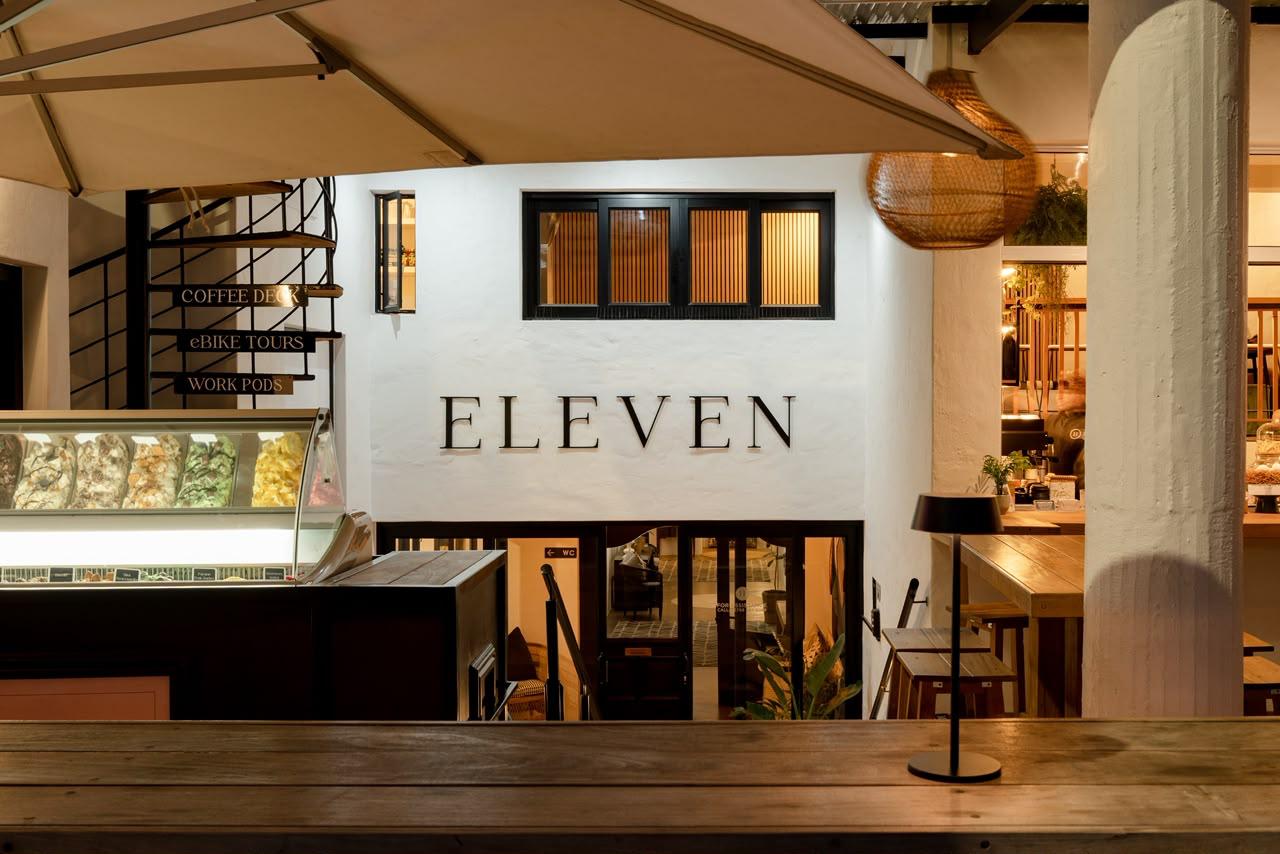
elevenplett.co.zaEleven Hotel is a boutique 12-suite hotel on the main street of Plettenberg Bay, South Africa, with a coffee shop and wine bar attached. It's three years old, which in boutique-hotel years is roughly equivalent to a teenager who has just discovered independence and is testing every boundary in sight.
This isn't the version of a case study where a hotel has a small problem, buys some software, and everything is perfect by paragraph four. Boutique hotels are a direct extension of the person who built them, which means they carry that owner's best instincts and their most stubborn habits in equal measure. If you've read this far, you're clearly not chasing a twenty-second pitch. So here's what actually happened at Eleven.
Meet Philly

Philly saw a building for sale on the main street of Plettenberg Bay and decided it would make a rather good hotel. That was more or less the entire feasibility study. Plett is a proper tourist town and the position was too good to ignore, so she jumped in, deep end first, no armbands.
A year and a half of design decisions, second-guessing, re-deciding, and general commercial soul-searching later, Eleven Hotel opened its doors, with a coffee shop and wine bar built in so there was always some life in the building from seven in the morning until nine at night.
To run it, she assembled a proper crew: Evans, Supervisor and Guest Relations; five room cleaners; Jake, Maintenance Manager; Elmarie, Housekeeping Manager; Pam, the baker; the coffee shop team; the evening wine bar team; Gayle, morning shift General Manager; Jen, evening shift General Manager; and Philly, hands-on across the admin side and everything else that needed a body in the gap.
The Commitment
Website up. Done. Property Management System in — Semper and Nightsbridge, both live. Done. Rooms ready. Done. Staff ready. Done. On your marks, get set, go.
They launched in November, just ahead of high season. One detail worth mentioning: Philly had never run a hotel before. Not a weekend of it. If that sounds familiar, it should — most boutique owners learn the trade the same way, which is to say by being thrown into it.
Chaos, predictably, ensued. Philly broke her own step record on her Garmin most evenings and would climb into bed each night genuinely unsure whether it was safe to fall asleep. By the end of the first week she was rattled enough to bring on three temporary staff overnight and train them by, essentially, waving a wand at them and hoping.
The season came and went. Philly rebuilt the ship while it was still at sea, steering on willpower and sheer stubborn passion. What came out the other side was proof the hotel could work — the bones were good, the concept was right — it just needed refining, and it needed the right tools running underneath it.
The early reviews were strong, but Philly knew exactly why: pure launch-day adrenaline. The real question kept her up more than the step count did — how do you keep this up once the adrenaline runs out?
The systems she had in place were genuinely good at the jobs they were built for — reservations, point of sale. But there was a hole right through the middle of the operation: nobody, and nothing, was actually watching the day-to-day, hands-on running of the hotel. Every standard, every fix, every judgment call ran through one person. It was total micro-management, and Philly realised, with some horror, that she had effectively married her hotel.
The Happy Divorce
Philly was also, separately, actually married. To Simon. Simon had ended up with a BCom because his father told him to get one, and Philly happened to have one too, so the arithmetic worked out. What Simon hadn't planned for was competing with a twelve-suite hotel for his wife's attention — and losing.
Eleven Hotel quietly took Philly's time, her energy, and handed back anxiety in return, plus the occasional maintenance crisis that a social science degree had done absolutely nothing to prepare Simon for.
So Simon went looking for a technology fix. The goal was simple to state and hard to do: streamline everything from the moment a guest arrives to the moment they leave, without the team running around like headless chickens to get there. He landed on the Keeper app, AI built in, and recommended Philly bring it on board.
When she bought it, Philly was told something that stuck: perfect software can always be sold, but it can never be bought.
Keeper's AI was never going to be a silver bullet on its own. It needed the team actually using it, actually caring about it, for any of it to mean anything. But put the effort in, and — as with most things worth doing — the reward followed.
The onboarding itself was unusual, in a good way. Keeper wouldn't switch the app on for the hotel until two key people were trained, tested, certified, and confident enough to train everyone else. Their recommendation: train the supervisors first. Philly talked it through with Pam and Evans, and they were the two who went through it.
Training ran over Teams, scheduled around Evans and Pam's actual shifts so operations never skipped a beat. They got a demo app to play with, sat through three short, practical online sessions, and finished with a simple multiple-choice test. Both passed, both got their Keeper certificates, and both were, by all accounts, quietly chuffed about it.
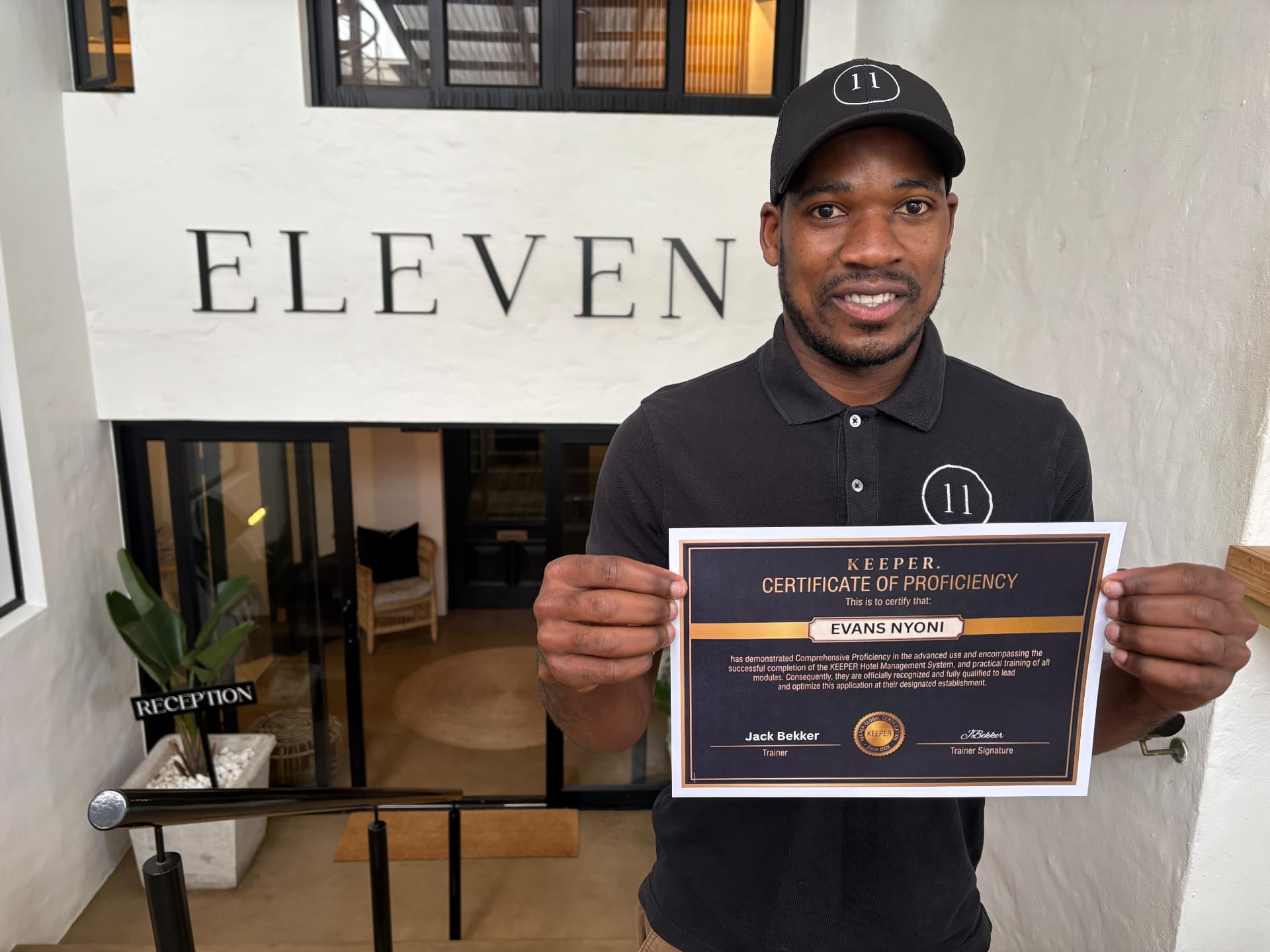
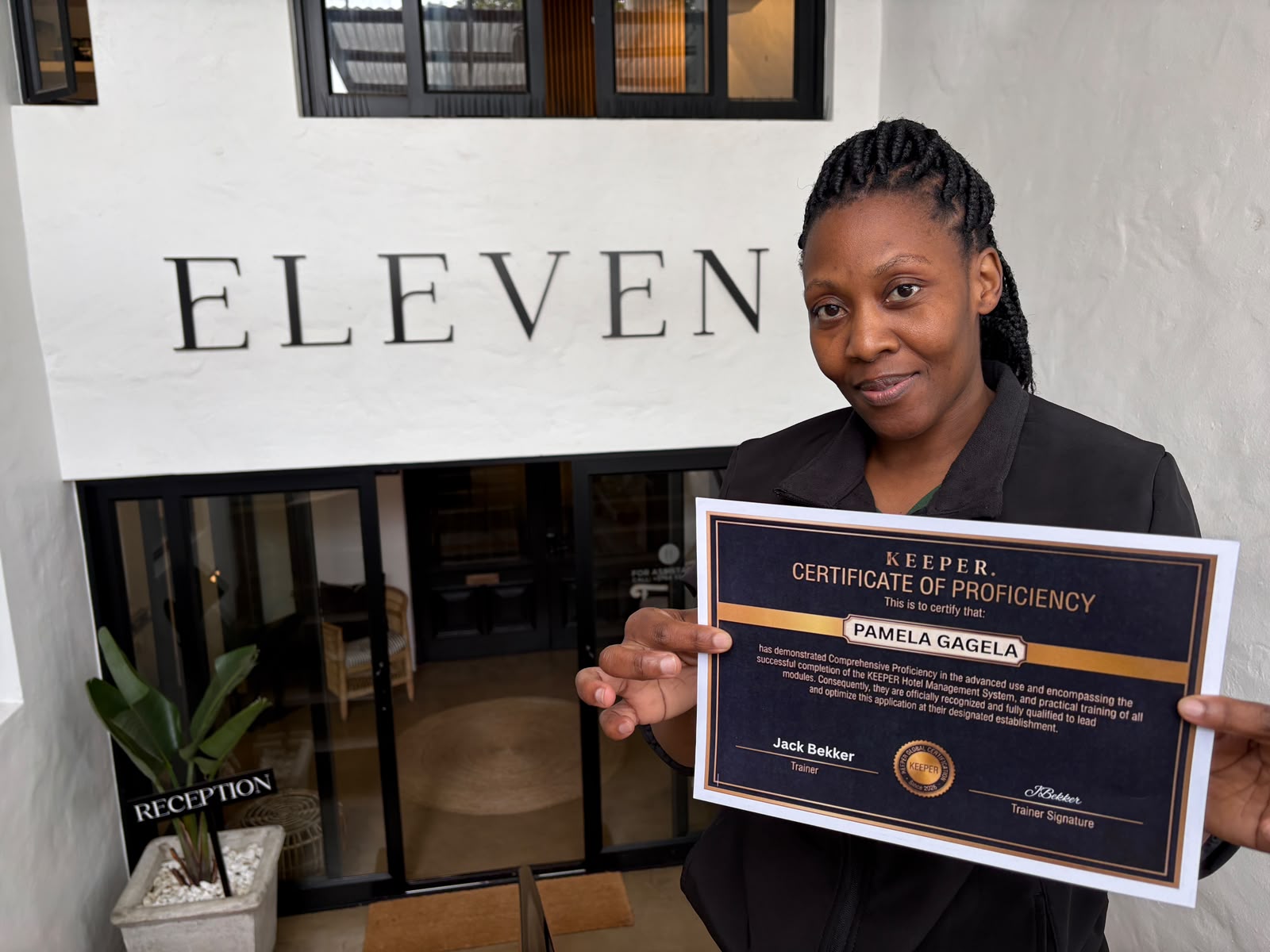
Usernames and passwords went out to the team, and with Evans and Pam leading the way, Eleven's digital operation properly began — with one very good running joke. The AI tool built into the app had been named Philly.
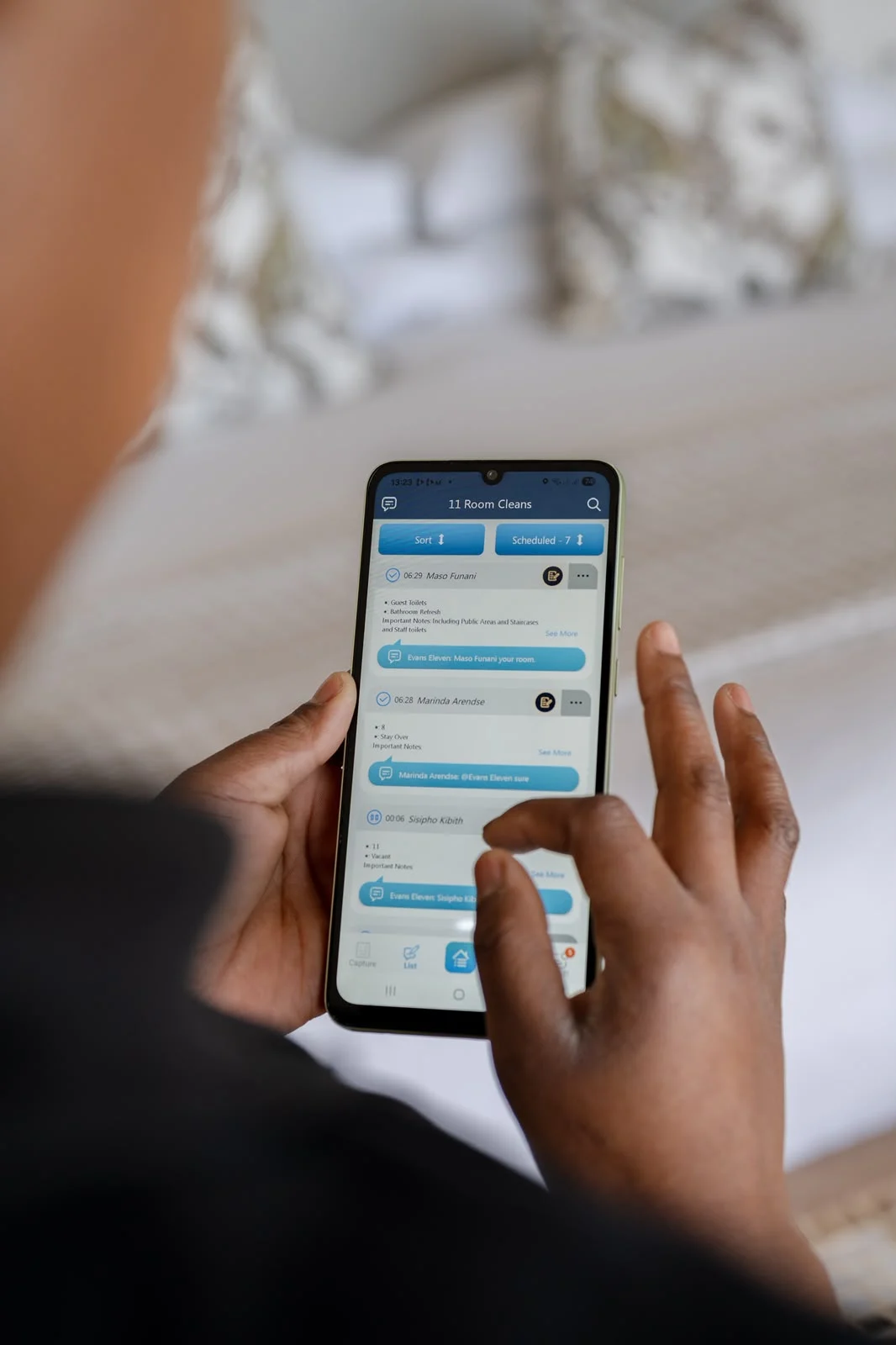
It didn't land smoothly at first. When Keeper switched on, it created real anxiety across the team. The level of visibility it gave into everyone's work was, frankly, uncanny — the AI moved across every part of the hotel at once, flagging quality issues and offering suggestions without so much as pausing for breath. It took real reassurance to help the team see this for what it was: information that made the work easier, not a manager watching over their shoulder. The whole point was to protect the Brand Philly had designed the hotel around in the first place, not to catch anyone out.
The mechanism behind it is called Golden Images — reference photos of every part of the hotel, from the rooms to the gardens, captured at their absolute best. Those images became the benchmark. Every room, every space, gets measured against what "good" actually looks like at Eleven, consistently, without Philly needing to walk the property herself to check.
In practice, a large part of what Philly used to do in person is now done by her digital namesake — the AI has become the hotel's quality inspector and, in its own quiet way, its coach.
Three months in, the AI has gotten sharper and the team has gotten better — the flags have dropped, because regular coaching means the obvious misses that used to slip through simply don't happen anymore.


What changed for the guest experience
Philly AI does more than mark rooms, too. It's woven into the guest review system — pulling reviews together in one place, drafting responses to the negative ones, and making sure the team actually sees and feels the good reviews they've earned, rather than those staying buried in a dashboard nobody opens. Guest feedback stopped being a number on a graph and became something the whole team could act on.
Keeper is now stitched into how Eleven Hotel runs day to day, holding the Brand steady from the moment a guest arrives to the moment they check out. It pulls the scattered, hands-on parts of running a boutique hotel into one place — and it's what let Philly finally, happily, divorce herself from the hotel that had her in its grip those first few chaotic months.
She's still very married to Simon, for the record. Just no longer married to housekeeping.
Eleven Hotel · Plettenberg Bay, South Africa · elevenplett.co.za